Why does this sound generic?
Paste a paragraph or two. This points at the specific spots that could belong to anyone's essay — and explains what makes them read that way. It won't rewrite them for you.
How to use it
- Paste a paragraph or two — the part that feels flat, or the opening you keep rewriting. No need for the whole essay.
- Get back the specific lines that could belong to anyone, and the lines where your own voice already comes through.
- Come back here. The tool opens in a new tab, so this page stays right where it is — and the sections below explain what to do with what it finds.
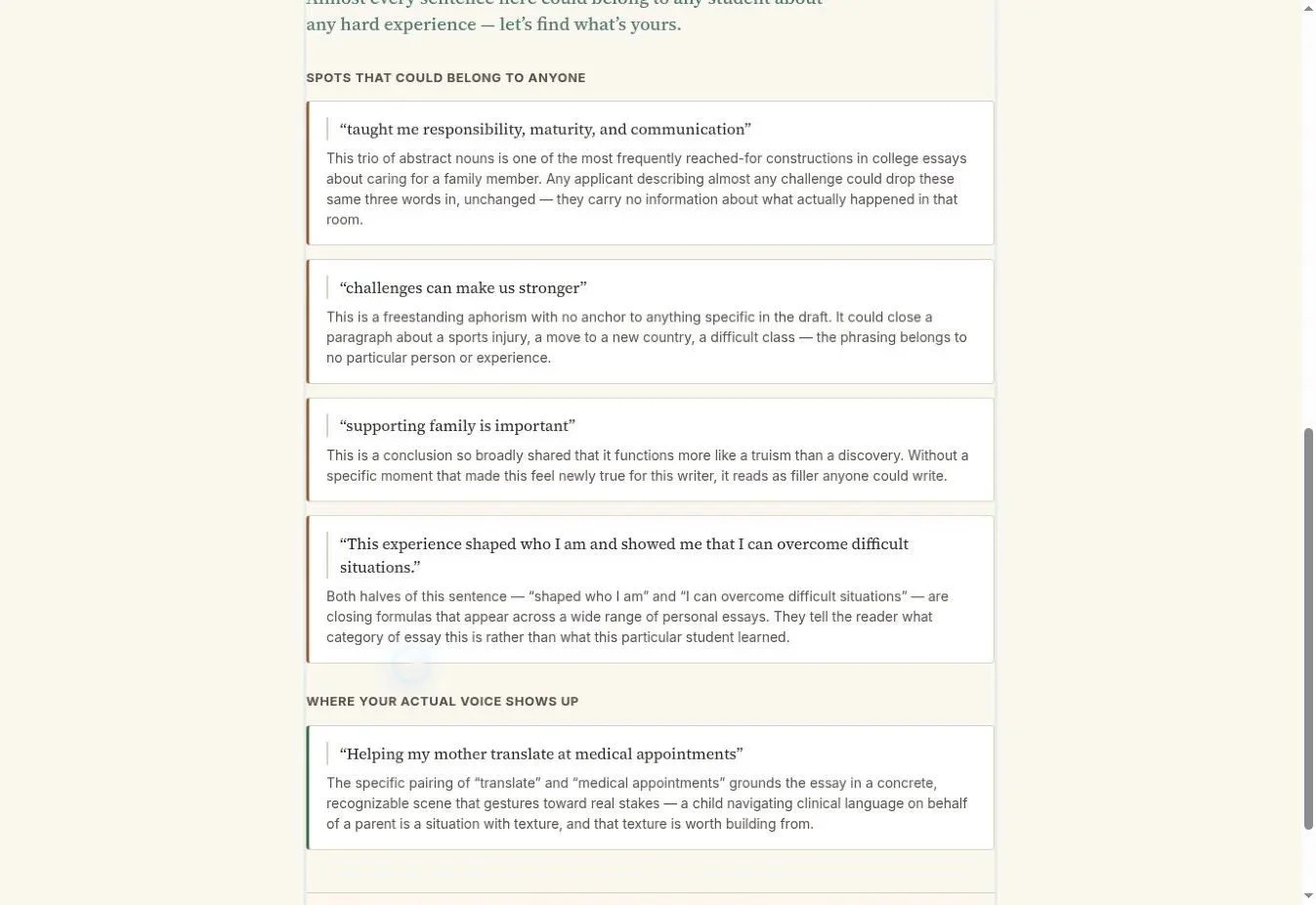
Your result will look something like this. Click to enlarge.
Go find the generic spots, then come back — the sections below explain why the flat version so often sounds fine to the person who wrote it.
Generic isn't about the topic
Two students can write about the exact same experience — a big game, a move, a family illness — and one essay reads like it could only be theirs while the other reads like a template. The difference usually isn't the topic. It's where the actual, specific voice got smoothed out in favor of something safer.
That's hard to catch in your own writing, because the generic version often still sounds fine to you. This tool reads for the exact spots where your draft slips into language anyone could have written, and separately, where your real voice already shows up — so you know what to protect.
What you'll get back
The specific spots that could belong to anyone's essay, and the spots where your actual voice already comes through. Naming what's generic is different from fixing it — that part takes real back-and-forth, not a diagnostic.
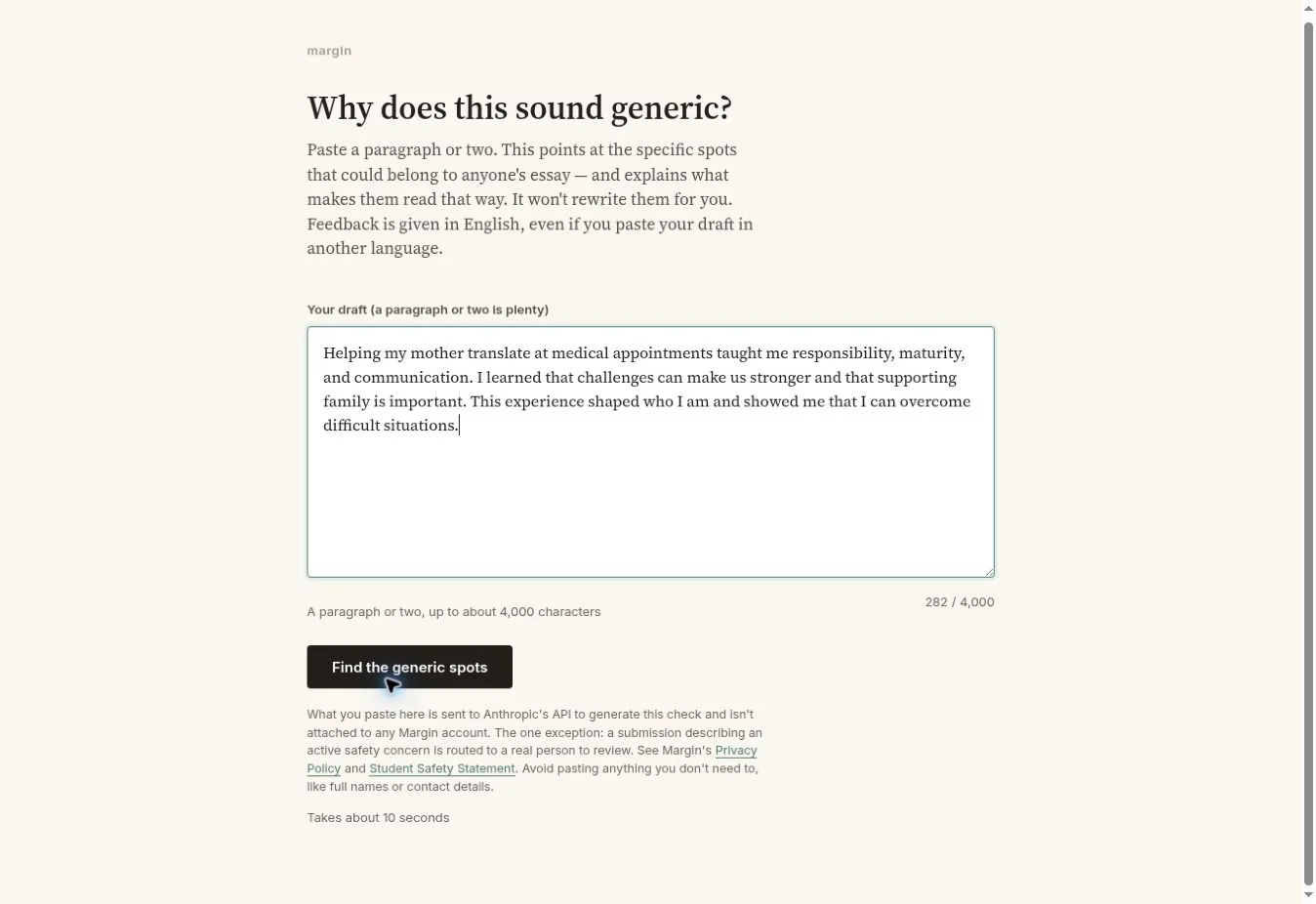
Paste a paragraph, no account. Click to enlarge.
Naming it is the easy part.
Getting from the safe version to the true one takes trying things — a riskier sentence, the detail you thought was too small, the thing you'd actually say out loud. Margin works through that with you, draft after draft, without writing it for you.
See how Margin works →
Still choosing a topic? Find your story → · Not sure your draft answers the prompt? Check that →