Does this answer the prompt?
Paste the prompt and your draft. In about ten seconds, see whether your essay is actually answering what was asked — not just related to it. No rewrite, no red pen, just a clear read.
How to use it
- Paste two things: the prompt exactly as it's written, and the draft you're worried about. Any length, any state of roughness.
- Get a read on what the prompt is actually asking, where your draft delivers, and where it drifts.
- Come back here. The tool opens in a new tab, so this page stays right where it is — and the sections below explain what to do with what it tells you.
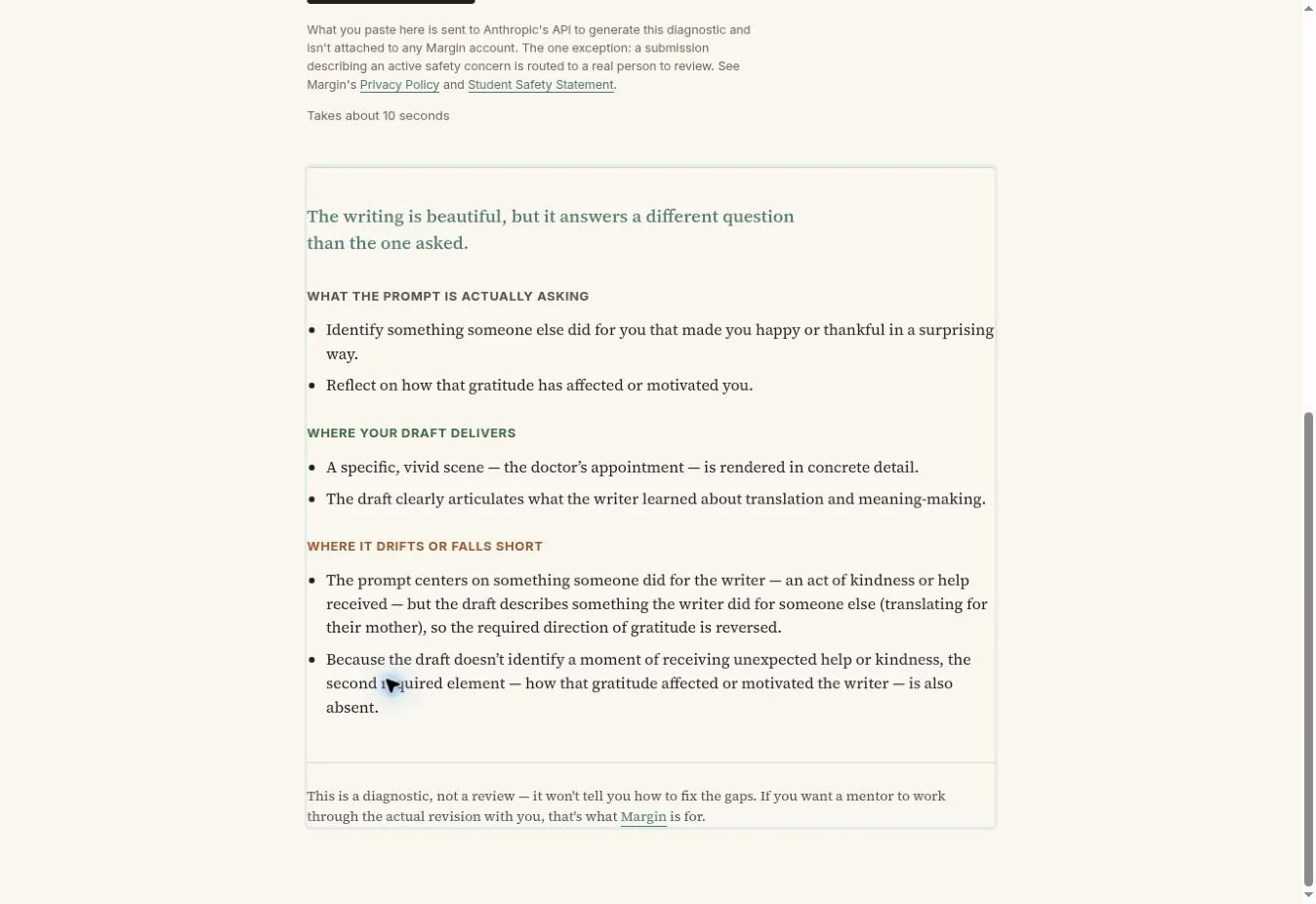
Your result will look something like this. Click to enlarge.
Go check your draft, then come back — the sections below explain why this gap is so easy to miss in your own writing.
Why this is easy to get wrong
Most essays that miss the prompt aren't off-topic — they're adjacent. A prompt asks how you overcame a challenge, and a draft describes the challenge in detail without ever getting to what came after. It reads like it's answering. It isn't, quite.
That gap is hard to see in your own writing, because you know what you meant. This tool reads your draft the way an admissions reader would — without that context — and shows you exactly where it delivers and where it drifts.
What you'll get back
A plain read of what the prompt is actually asking, where your draft delivers on that, and where it falls short or wanders. It's a diagnosis, not a fix — it won't rewrite anything for you.
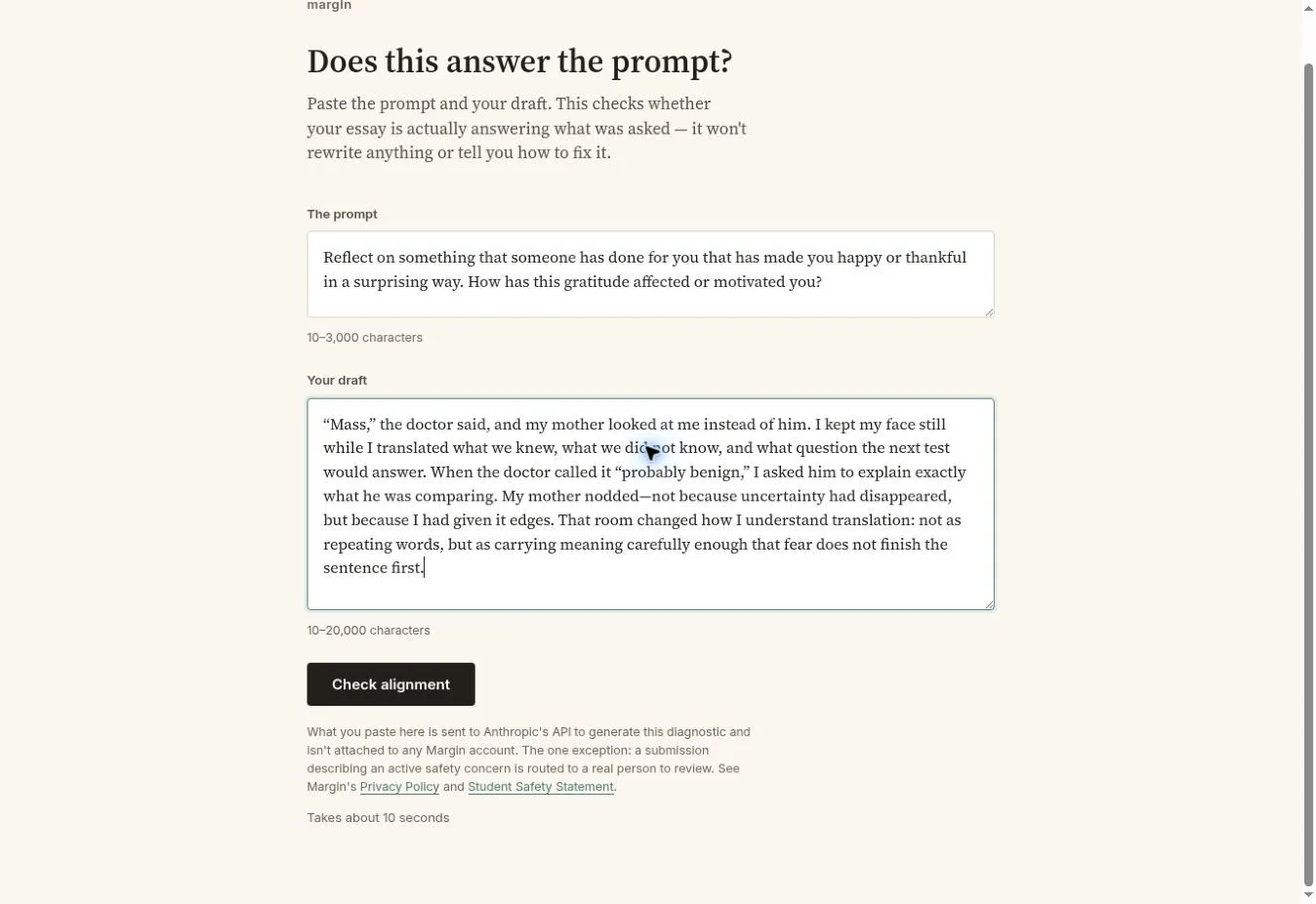
Two boxes, no account. Click to enlarge.
Knowing where it drifts is the easy part.
Closing that gap takes real back-and-forth — trying a different opening, cutting the part you're attached to, finding what the prompt was actually after. Margin works through that with you, draft after draft, without writing it for you.
See how Margin works →
Still choosing a topic? Find your story → · Worried your draft sounds generic? Check for that →